
March 18, 2026 - PBS News Hour full episode
3/18/2026 | 57m 46sVideo has Closed Captions
March 18, 2026 - PBS News Hour full episode
Wednesday on the News Hour, Israel kills another top Iranian official as lawmakers on Capitol Hill question intelligence officials about the reasons for starting the war. The nominee to lead the Department of Homeland Security, Sen. Markwayne Mullin, testifies in his confirmation hearing. Plus, migrants in Lebanon are once again caught in limbo as the regional war escalates.
Problems playing video? | Closed Captioning Feedback
Problems playing video? | Closed Captioning Feedback
Major corporate funding for the PBS News Hour is provided by BDO, BNSF, Consumer Cellular, American Cruise Lines, and Raymond James. Funding for the PBS NewsHour Weekend is provided by...
Support provided by:

March 18, 2026 - PBS News Hour full episode
3/18/2026 | 57m 46sVideo has Closed Captions
Wednesday on the News Hour, Israel kills another top Iranian official as lawmakers on Capitol Hill question intelligence officials about the reasons for starting the war. The nominee to lead the Department of Homeland Security, Sen. Markwayne Mullin, testifies in his confirmation hearing. Plus, migrants in Lebanon are once again caught in limbo as the regional war escalates.
Problems playing video? | Closed Captioning Feedback
How to Watch PBS News Hour
PBS News Hour is available to stream on pbs.org and the free PBS App, available on iPhone, Apple TV, Android TV, Android smartphones, Amazon Fire TV, Amazon Fire Tablet, Roku, Samsung Smart TV, and Vizio.
Providing Support for PBS.org
Learn Moreabout PBS online sponsorshipGEOFF BENNETT: Good evening.
I'm Geoff Bennett.
AMNA NAWAZ: And I'm Amna Nawaz.
On the "News Hour" tonight: Israel# kills another .. as lawmakers on Capitol Hill question intelligence# officials about the reasons for starting the war.
TULSI GABBARD, U.S.
Director of National# Intelligence: It is not the Intelligence## community's responsibility to determine# what is and is not an imminent .. SEN.
JON OSSOFF (D-GA): OK, here's the problem.# No, it is precisely your responsibility.
GEOFF BENNETT: The nominee to lead# the Department of Homeland Security,## Senator Markwayne Mullin, testifies# in his confirmation hearing.
AMNA NAWAZ: And migrants in Lebanon are once again# caught in limbo as the regional war escalates.
MICHAEL PETRO, Jesuit Refugee Service:# The legal structure here is designed## to exploit and to make migrants invisible.
(BREAK) AMNA NAWAZ: Welcome to the "News Hour."
Tonight, a series of strikes across# the Middle East jolted energy markets,## and fueled concerns that the# war won't end any time soon.
GEOFF BENNETT: Brent crude# oil prices, a key benchmark,## are nearing a 52-week high after# Israel hit a large gas field in Iran.## And Iranian strikes caused extensive# damage to a major Qatari fuel hub.
Our Nick Schifrin starts our coverage.
NICK SCHIFRIN: Today in Southern Iran, Israel# expanded its effort to collapse the Iranian## state.
An Israeli strike targeted South Pars,# the world's largest natural gas field.
And Israel## continued its decapitation campaign, killing# Iranian intelligence minister Esmail Khatib,## sanctioned by the U.S.
for human# rights abuses and cyberattacks.
In response, Iran issued unprecedented# evacuation warnings for energy facilities## across the Gulf.
And, tonight, there are# multiple explosions reported in Saudi Arabia,## and Qatari admitted to -- quote --# "extensive damage" to a major energy hub.
Tonight, Qatari expelled Iranian diplomats.
The## attacks stoked fears of a global# oil crunch and rising prices.
SEN.
RON WYDEN (D-OR): Every problem# we're seeing now was not only foreseeable,## but was actually predicted# by the intelligence agencies.
NICK SCHIFRIN: It also became the focus# of today's Senate Intelligence Committee## threat assessment hearing with the# leaders of the intelligence community.
SEN.
ANGUS KING (I-ME): There seems to be# a discrepancy between what the Intelligence## Committee has -- community has reported over# the years and what the president has said.
NICK SCHIFRIN: Like these comments on Monday.
DONALD TRUMP, President of the# United States: So they hit Qatar,## Saudi Arabia, UAE, Bahrain, Kuwait.# Nobody expected that.
We were shocked.
NICK SCHIFRIN: In fact, four weeks before the war,# then Supreme Leader Ali Khamenei posted on X in## English: "The Americans should know, if they start# a war, this time, it will be a regional war."
SEN.
ANGUS KING: The president says nobody# knew.
And my question is, did you tell him?
JOHN RATCLIFFE, CIA Director: The comments that# you talked about, I had not heard.
But what I can## tell you is that Iran had specific plans to hit# U.S.
interests in energy sites across the region.
TULSI GABBARD, U.S.
Director of# National Intelligence: This has long## been an assessment of the I.C.
that Iran would# likely h.. SEN.
ANGUS KING: And my question is,## was that communica.. TULSI GABBARD: And it's because of that# longstanding assessment that the I.C.
has## continued to report that the Department of War# took the preemptive planning measures that it did.
NICK SCHIFRIN: Director of National# Intelligence Tulsi Gabbard also made## this assessment of Iran's nuclear ambitions.
TULSI GABBARD: Iran was trying to recover# from the severe damage to its nuclear## infrastructure sustained during the 12-day# war and continued to refuse to comply with## its nuclear obligations with the IAEA,# refusing them access to key facilities.
NICK SCHIFRIN: But in her prepared testimony# confirmed by her staff to PBS "News Hour,"## Gabbard wrote instead -- quote -- "As# a result of Operation Midnight Hammer,## Iran's nuclear enrichment program was# obliterated.
There has been no effort## since then to try to rebuild# their enrichment capability."
That directly refutes President# Trump's State of the Union.
DONALD TRUMP: They were warned to make no future# attempts to rebuild their weapons program,## in particular, nuclear weapons, yet# they continue.
They're starting it all## over.
We wiped it out and they# want to start all over again.
NICK SCHIFRIN: Prewar presidential statements help## lead to yesterday's resignation by National# Counterterrorism Center Director Joe Kent,## who wrote -- quote -- "Iran posed# no imminent threat to our nation."
TULSI GABBARD: It is not the intelligence## community's responsibility to determine# what is and is not an imminent threat.
SEN.
JON OSSOFF (D-GA):# OK, here's the problem.
No,## it is precisely your responsibility to determine# what constitutes a threat to the United States.
NICK SCHIFRIN: Republicans emphasized# Iran's overall decades-long threats,## its nuclear program, and the Middle# East's largest missile arsenal.
SEN.
JOHN CORNYN (R-TX): Is there# anything to indicate that Iran## had ceased in its nuclear ambitions or in# its desire to continue to build ballistic## missiles capable of threatening American# troops and allies in the Middle East?
JOHN RATCLIFFE: Senator, no.
In fact,# the intelligence reflects the contrary.
SEN.
JOHN CORNYN: So you disagree with Mr.
Kent?
JOHN RATCLIFFE: I do.
NICK SCHIFRIN: Today, the war also# intensified in Beirut.
Multiple videos## recorded the moment an Israeli airstrike reduced# this residential building to rubble and smoke.
The Israeli army said the building hid millions# of dollars for Hezbollah and warned residents## before the strike.
The war has become# a nightly deadly drumbeat.
Overnight,## Iran fired a barrage of missiles at# Israel carrying cluster bombs.
One## strike hit this apartment outside# Tel Aviv, killing a couple inside.
For the PBS "News Hour," I'm Nick Schifrin.
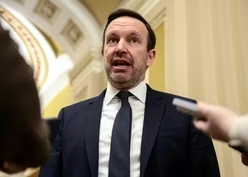
GEOFF BENNETT: And for perspective on how# many elected Democrats are weighing these## developments, I spoke earlier with# Senator Chris Murphy of Connecticut.
Senator Chris Murphy, welcome to the "News Hour."
SEN.
CHRIS MURPHY (D-CT):# Yes, thanks for having me.
GEOFF BENNETT: I want to start with today's# global threa.. director of National Intelligence, Tulsi Gabbard,# say that the intelligence community has identified## no foreign threat to the upcoming congressional# elections, which would be a first since 2016.
And she also described Iran's regime as# intact, but largely degraded.
How should## Americans interpret all of that?
Are key# threats actually diminishing, in your view,## or is the intelligence community# changing how they're presenting them?
SEN.
CHRIS MURPHY: I wasn't in that hearing today,# so I didn't get to listen to her full testimony.
But, of course, there are foreign actors that# are still trying to meddle in and manipulate## American politics.
The Russians have never# stood down their efforts to try to pit us## against each other, to try to undermine our# democracy.
The Chinese continue as well.
So it is patently ridiculous and# really dangerous, heartbreaking,## even, to hear the person who's in charge# of interpreting our intelligence say that## there are no countries that are trying to# manipulate or interfere in our elections.
The Iranian regime is intact.
They are# still able to launch attacks in the region.## They are likely planning attacks# against the United States.
And we## are frankly more at risk of harm from Iran# today than we were before the war began.
GEOFF BENNETT: Let me ask you about# that, because you and other Democrats## have pushed for a war powers vote, since# Congress hasn't authorized this conflict.
At the same time, the U.S.
is expanding its# presence.
The scope of the war appears to## be widening.
There is this fundamental mismatch,# where Congress is trying to assert its authority,## some members of Congress, at least, and the# events on the ground have already moved ahead.
SEN.
CHRIS MURPHY: Well, Congress is not# asserting its authority, because Congress is## run by Republicans, and, right now, Republicans# view themselves as employees of Donald Trump.
Not a single open hearing on a war that is# lighting the world on fire.
We have a new war## breaking out right now between Israel and Lebanon# that is a consequence of Trump's invasion of Iran,## where 1,000 have already died.
And we have# prices going up for everybody here at home,## gas prices that are already becoming# unaffordable, food prices to follow.
We want Republicans to go on record# over and over and over again.
I think## at some point they will have to start# voting against this war because it is## becoming more and more unpopular as# it's becoming more and more illegal.
GEOFF BENNETT: After the classified briefings# that you and your Senate colleagues received,## you emerged from that briefing and# said the administration's approach## is incoherent.
What specifically was missing?
SEN.
CHRIS MURPHY: So I had another# two-hour briefing this morning again,## another one behind closed doors.
The intent# here is to give the public no information.
But what we know for certain is that the# administration has no plan on how to end this war.## They have basically said that they are not going# to try to change the regime.
So you are going to## be stuck with an Iranian leadership that is worse,# more anti-American than the prior leadership was.
They have also said this war will have# an end, which means, though we will do## some damage to their missile capacity and their# drone capacity, the minute that we stop bombing,## they will rebuild all that capacity.
And that# won't take them years.
It'll take them months.
GEOFF BENNETT: Have they presented# any evidence that you can tell us## about that would suggest that Iran posed# an imminent threat before the war started?
SEN.
CHRIS MURPHY: The closest they come is# this idea that, if Israel had attacked Iran,## maybe Iran would have attacked the United# States and so we're better off attacking first.
But they still attacked the United States.
So# we didn't limit the exposure to us.
We just## participated with the Israelis in the initial# attack that created the risk for America and## our allies.
But, no, they don't even try to# present evidence that there was some independent,## imminent threat against the United States.
There# wasn't, and they can't even pretend there is.
GEOFF BENNETT: In the time that remains,# I want to ask you about a potential way## out of this partial government shutdown.# We're now five weeks into it.
The most## visible strain is at the nation's# airports, longer security lines,## callouts from TSA workers who've not# been paid in longer than a month now.
Yesterday, the White House offered this.
They said# that they would expand the use of body cameras for## federal immigration agents, limit enforcement in# sensitive locations like hospitals and schools,## additional oversight of DHS detention facilities,# visible officer identification, and that they## would follow existing law prohibiting the# deportation or detention of U.S.
citizens.
From your vantage point as a ranking# member on Homeland Security Appropriations,## is any of this -- is this a meaningful# starting point or is this largely cosmetic?
SEN.
CHRIS MURPHY: I mean, it's not# even really cosmetic.
If you actually## sort of read the proposal that they sent us, they# basically said we will just observe existing law.
And you can't trust what they have said# because they are violating laws every## single day.
A federal judge named 94# different court orders that they are## currently in violation of.
Here's the quickest# way to solve the problem.
Let's just open TSA## back up.
Let's just open FEMA back up.# Let's just open the Coast Guard back up.
Almost every day during the last# week, Democrats have gone to the## Senate floor and offered a motion to# open up TSA, the Coast Guard and FEMA,## and isolate our difference.
We have a# major difference on how the administration## is breaking the law in the way that they# implement and enforce our immigration laws.
Let's not hold TSA hostage.
Let's not hold# the Coast Guard hostage.
Republicans refuse## to open up TSA and the Coast Guard,# because they want to use the closure## of those agencies as leverage to try to# get us to condone Trump's lawlessness.
GEOFF BENNETT: On that point, what specifically# is still missing for you to support a deal?
SEN.
CHRIS MURPHY: Well, we have put# on the table some pretty reasonable## priorities that are, frankly,# what the American public wants.
We want to end the masks and require# identification.
We want to end these## roving patrols where officers are just# going around asking people to show their## papers.
And then we need accountability# for these murders and these beatings.## They can't be just swept under the rug# with an internal DHS investigation.
Like always happens, states and independent# law enforcement prosecutors have to be able## to investigate.
We have seen no offer# from the administration that they're## going to stop the roving patrols, that# they're going to get rid of these masks,## and that they're going to allow# for independent investigations.
If they just do those three things,## I think that there will likely be# the Democratic votes to open up ICE.
GEOFF BENNETT: Democratic Senator Chris Murphy of# Connecticut, thanks for your time this evening.
SEN.
CHRIS MURPHY: Thank you.
AMNA NAWAZ: In the day's other headlines:# The U.S.
Federal Reserve expects to cut## rates once this year after leaving rates# unchanged for a second straight time today.
In its statement, the Fed cited uncertainty# brought on by the war with Iran.
JEROME POWELL, Federal Reserve Chairman:# The U.S.
economy is doing pretty well.## It's just we don't know what the effects# of this will be, and really no one does.
AMNA NAWAZ: Speaking to reporters, Fed Chair# Jerome Powell stressed that it's hard to know## the long-term impact of the conflict on the# economy, though, in the near term, inflation## is likely to remain elevated.
Today's meeting is# expected to be his second to last as Fed chair.
Powell also said he has -- quote# -- "no intention of leaving" until## a Justice Department probe related to the# renovation of the Fed's headquarters is over.
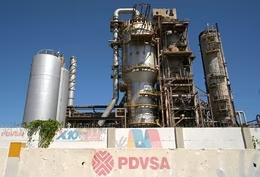
The Treasury Department is easing sanctions on# Venezuela's state-owned oil company, trying to## tame the rise in oil prices brought on by the# Iran war.
The move authorizes the entity, known## as PDVSA, to sell Venezuelan oil to U.S.
companies# and on global markets.
But there are limitations.## For one, Venezuela can't sell oil to Russia,# Iran, North Korea and some Chinese entities.
And according to the Associated Press,# the U.S.
will control the cash flow from## the transactions by a special account.
This# comes as Americans are now paying, on average,## $3.84 for a gallon of regular.# That's the highest since 2023.
Pakistan and Afghanistan announced a# temporary pause in cross-border fighting## today ahead of the Muslim holiday# of Eid al-Fitr, which marks the end## of Ramadan.
A Pakistani official says# the halt is set to last through Monday.
It comes as Afghan authorities held a mass# funeral for victims of a Pakistani airstrike## that reportedly hit a drug rehabilitation# hospital in Kabul earlier this week.
At the## facilities gates today, family and friends were# still searching for their missing relatives.## Afghan officials say at least 408 people were# killed in the strike, with more than 260 wounded.## Pakistan has disputed those numbers and says it# had targeted military facilities in the area.
Back in this country, Illinois Lieutenant Governor# Juliana Stratton looks to have a clear path to the## U.S.
Senate in the deep blue state after# winning last night's Democratic primary.
(CHEERING) AMNA NAWAZ: Speaking to supporters, Stratton# pledged to push for higher wages and abolish ICE,## adding that she plans to -- quote -- "bring# this fight straight to Donald Trump's door."
She beat out a crowded field with the# support of Governor J.B.
Pritzker,## who's considered a possible 2028 presidential# contender.
If elected in November,## Stratton will become only the sixth Black# woman to ever serve in the U.S.
Senate.
Much of the Southwest is baking from# record-breaking heat, even though winter## officially ends in a few days.
In all, nearly 40# million Americans from the Bay Area to Phoenix## were under heat alerts and potentially# dangerous extreme heat warnings today.## The summerlike heat will build through the# end of the week, pushing temperatures up to## and above 100 degrees in places like# Palm Springs, Phoenix and Las Vegas.
That's nearly 30 degrees above normal for# this time of year.
The warmer weather is## allowing beachgoers in the Bay Area to enjoy# some time in the sun a bit earlier than usual.
CHARLES LINK, San Francisco Resident:# It is a surprise.
It's not the norm,## but it's a pleasant surprise.
JUSTYCE ROLIZ, San Francisco Resident: It# feels like summer already in .. that's crazy, but I love it.
We go to the# beach every day, and this is perfect weather.
AMNA NAWAZ: This is all in stark# contrast to the Midwest and the## Eastern half of the country, which# are still digging out after powerful## storms that led to thousands of# flight cancellations this week.
The WNBA says it's reached a preliminary deal# with its players union that could see top stars## earning more than a million dollars a year.# The exact terms are still being finalized,## but the head of the Players Association says## the agreement would tie salaries to# league revenues for the first time.
It would also quadruple the average# player's salary to around half-a-million,## and it would improve on family planning# and parental leave benefits.
The deal is## expected to reflect the WNBA's surge in# popularity and revenue in recent years,## though it still needs to be ratified# by both the players and the league.
And Venezuela is now the reigning champion of# the World Baseball Classic after a nail-biter## of a game in Miami.
They beat the U.S.
team# 3-2 thanks to an RBI double from Eugenio## Suarez in the ninth inning, with pitcher Daniel# Palencia closing out the win with a strikeout.
That kicked off mass celebrations on the field# and back home.
Thousands of Venezuelans danced## in the streets, with the revelry lasting# for hours.
Baseball is a passion there.## And the nation's first ever victory in the# tournament is a particular source of pride,## with acting President Delcy Rodriguez# declaring the occasion a national day of joy.
And on Wall Street today, stocks tumbled on# worries about rising oil prices and fewer rate## cuts by the Fed.
The Dow Jones industrial average# lost more than 750 points on the day.
The Nasdaq## fell more than 300 points, or almost 1.5 percent.# The S&P 500 posted its first loss of the week.
Still to come on the "News Hour": Cuba faces# threats from widespread power outages and## from President Trump; an investigation# uncovers abuse allegations against the## late labor rights icon Cesar Chavez; and# Judy Woodruff reports from Gettysburg on## deep divisions as the country gets# ready to note a major anniversary.
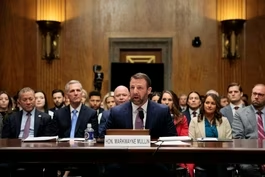
GEOFF BENNETT: Oklahoma Senator# Markwayne Mullin today faced his## fellow lawmakers for a confirmation hearing# to run the Department of Homeland Security.
AMNA NAWAZ: The hearing became heated and# emotional at times, as senators grilled## Mullin on past comments and how he might# differ from former DHS head Kristi Noem.
Lisa Desjardins was in the room# covering it all and has this report.
SEN.
RAND PAUL (R-KY): So help you God.
LISA DESJARDINS: For Markwayne Mullin,## a lesson, the difference between# being a senator and being a nominee.
SEN.
RAND PAUL: Explain to the American public# why they should trust a man with anger issues.
LISA DESJARDINS: Committee Chairman and fellow# Republican Rand Paul blasted the Homeland## Security nominee on rare and personal grounds.
In# February, Mullin called Paul a freaking snake for## not always voting with Republicans and said he# understood why someone attacked Paul in 2017.
SEN.
RAND PAUL: Tell the world# why you believe I deserved to be## assaulted from behind, have six# ribs broken and a damaged lung.
SEN.
MARKWAYNE MULLIN (R-OK), DHS Secretary# Nominee: Well, stand your butt up then.
LISA DESJARDINS: Paul also raised Mullin's near# fistfight in a diffe.. SEN.
BERNIE S ANDERS (I-VT): No, no, sit down.
SEAN O'BRIEN, General President, Teamsters:.. SEN.
BERNIE SANDERS: You know, .. SEN.
MARKWAYNE MULLIN: And as far as me saying# that I invoke violence, I don't.
I don't think## anybody should be hit by surprise.
I don't# like that.
But if I do have something to say,## everybody in this room knows I will come# straight to you.
I make mistakes just like## anybody else.
But mistakes, if you own them,# you can learn from them and you can move ahead.
SEN.
ASHLEY MOODY (R-FL): That's# the kind of person, passionate,## fierce, a fighter, loyal, that's who# I want now protecting this country.
LISA DESJARDINS: Other Republicans# pushed back against the criticism.
SEN.
BERNIE MORENO (R-OH): And maybe you're# not going to replace Shakespeare's the next## greatest orator on earth.
You talk from the# heart.
And that's OK.
You are who you are.
LISA DESJARDINS: For Democrats, the# question was, who will he be if in charge?## They raised the nationwide DHS immigration# crackdown and its aggressive tactics,## as well as the killings by federal# agents of Renee Good and Alex Pretti.
SEN.
GARY PETERS (D-MI): You called# Alex Pretti -- quote -- "a deranged## individual that came in to cause max damage."
Could we expect those kinds of quick# responses if you are confirmed?
SEN.
MARKWAYNE MULLIN: I went out# there too fast.
I was responding## immediately without the facts.
That's my# fault.
That won't happen as secretary.
LISA DESJARDINS: Still, he did not# apologize to the families of either,## saying he will wait for investigations to# complete.
But Mullin did signal a possible and## notable shift for DHS agents, suggesting a higher# bar for entering private homes or businesses.
SEN.
ANDY KIM (D-NJ): They were# going in to get interviewed for## a green card and were arrested upon their arrival.
LISA DESJARDINS: And when asked, he indicated a## reluctance to detain people at# legal immigration appointments.
SEN.
MARKWAYNE MULLIN: People are going through# the process and trying to obtain it legally,## because we do have naturalization ceremonies# Monday through Friday and as a country everywhere.
MAN: That's right.
SEN.
MARKWAYNE MULLIN: We'.. LISA DESJARDINS: But he tripled down# on his history of election denialism.
SEN.
ELISSA SLOTKIN (D-MI):# Who won the 2020 election?
SEN.
MARKWAYNE MULLIN: Ma'am, we# know that President Joe Biden was## sworn into office.
And he was the# president for the last four years.
LISA DESJARDINS: Refusing to say that# President Trump lost the 2020 election.
Mullin did not rule out sending# federal officers to polling places,## an idea the president's allies have# floated, but DHS has until now dismissed.
SEN.
ELISSA SLOTKIN: Do you feel# you have the authority to put## uniformed officers at polling locations in 2026?
SEN.
MARKWAYNE MULLIN: Ma'am, we said# this in your office.
The only reason## why my officers would be there,# if there was a specific threat.
LISA DESJARDINS: It was Republican Paul who was# Mullin's greatest hazard, announcing he will vote## no on him.
That would usually be a problem.
But# Democrat John Fetterman of Pennsylvania is a yes.
SEN.
JOHN FETTERMAN (D-PA): My experience with you# has been consistent kindness and professionalism.
LISA DESJARDINS: A hearing that was personal,# high-stakes, and included a surprise.
MAN: It was in a conflict zone.
SEN.
MARKWAYNE MULLIN: Sir, once again,# I'm not talking about specific details.
LISA DESJARDINS: Mullin said he traveled overseas# on a classified trip as a member of the House.
SEN.
MARKWAYNE MULLIN: But I can't give you# all the details to it because it's not for me## to release it.
Mullin pledged to tell senators# more in a secure setting.
And with that promise,## the committee is on track to vote on# Mullin incredibly quickly, tomorrow.
SEN.
RAND PAUL: This hearing is adjourned.
LISA DESJARDINS: For the "PBS# News Hour," I'm Lisa Desjardins.
AMNA NAWAZ:## We return now to the wider impacts of the# war with Iran, which has reignited fighting## between Israel and the Iran-backed# extremist group Hezbollah in Lebanon.
Beyond the more than 900 reported dead in Lebanon,# nearly one million there are now displaced.
Among## them are some of the roughly 170,000 migrant# workers not counted by the government.
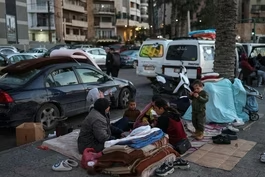
GEOFF BENNETT: For many, Lebanon was# supposed to be a place of refuge,## a chance to escape the war or build a better# life.
Now violence has found them again.
Special correspondent Simona# Foltyn reports from Beirut.
SIMONA FOLTYN: This Jesuit church has been# a parish for migrant workers for about 40## years.
Now, as Israeli bombs rain down# on Beirut, it has become their sanctuary.
FATHER DOUG JONES, Saint Joseph Jesuit Church:# We welcome migrants in these spaces.
They## usually don't stay here.
But that's where we# -- we give what people need.
And, right now,## people need housing and food and a safe place.
SIMONA FOLTYN: Around 200 migrant workers are# sheltering here.
They came to Lebanon looking## for stability and work from countries around# the world plagued by conflict and poverty.
Almas is from Ethiopia and works as a cleaner# in Beirut.
She lives in Jinah (ph), a seaside## neighborhood that came under Israeli# bombardment in the first days of the war.
ALMAS ASAMINU, Ethiopian Migrant Worker# (through translator): I was very scared.## I was sleeping in my undergarments.
I ran out,# grabbed my clothes, got dressed outside, then## ran to the seaside.
There were so many people.# Then I came here at around 3:00 in the morning.
SIMONA FOLTYN: Brother Michael Petro runs the# shelter as part of the Jesuit Refugee Service.
MICHAEL PETRO, Jesuit Refugee Service: Almas# has called me.
I saw her number.
I knew, OK,## when I wake up, people are going to be here.# That is exactly what happened.
On Monday morning,## by the time I woke up, there were already# several dozen people in the church.
And so we knew by the end of the day# we were going to be completely full.
SIMONA FOLTYN: Schools turned government# shelters are off-limits to the migrant community.
ALMAS ASAMINU (through translator):# They don't accept me because I'm a## foreigner.
The school shelters are# only open to Lebanese and Syrians.
SIMONA FOLTYN: Many here have nowhere else to# go, not in Lebanon, not in their home countries.## Almas' husband is Sudanese and# was killed when he went back to## his home region of Darfur.
Returning# to Ethiopia isn't an option either.
ALMAS ASAMINU (through translator): I# married a Muslim, and I'm a Christian.## My brother and my family didn't accept# that.
That's why I have to stay here.
SIMONA FOLTYN: Migrant workers in Lebanon are# governed under the kafala or sponsorship system,## a restrictive and exploitative legal framework## binding their legal status# directly to their employer.
The migrant community ranks among the most# vulnerable people in Lebanon during the best## of times.
On any given day, they grapple with# abuse, racism and discrimination, all enabled## by the so-called kafala system, which grants# their employer or sponsor significant control## over their lives.
Now, these vulnerabilities# are felt much more acutely during times of war.
When this latest war broke out, the church was the# only shelter in Beirut that would accept migrants.
MICHAEL PETRO: Migrants always fall through# the cracks in the humanitarian system here in## Lebanon.
Part of that is that the -- is the --# exactly what you're talking about, is the way in## which the legal structure here is designed# to exploit and to make migrants invisible.
Their invisibility makes it such that people don't# see them as anything more than people who serve,## right, people -- they're not people to# be served.
They're people who serve.
SIMONA FOLTYN: The church is located in# Beirut's Christian area of Ashrafiyeh.## The closest Israeli strike hit a building nearly# 300 yards away in an adjacent Muslim neighborhood.
MICHAEL PETRO: Yes, we felt it here# in the church.
Windows rattled,## set off car alarms.
You can feel it# in your body when it's that close.
SIMONA FOLTYN: Authorities in Ashrafiyeh# have largely refused to take Shia Muslims## fleeing a war amid fears that Israel# might start targeting Christian areas too.
Though marginalized, the migrants are# excluded from the sectarian equation.
MICHAEL PETRO: And the political tensions# that are existing right now around displaced## persons and the conflict in Lebanon, their# invisibility allows us to welcome them,## right?
So the tensions that are coming with other# displacements are not affecting migrants as much.
SIMONA FOLTYN: In a world where religious# and sectarian rifts appear to be widening,## the church is a microcosm of peaceful# coexistence.
In the evening, the Muslim## community gathers for iftar to break# their fast during the month of Ramadan.
This woman fled the Sudanese war in 2023# with her husband and three kids.
Her home## in the capital Khartoum was destroyed,# her uncle killed.
Lebanon seemed like a## safe option back then.
Her husband# found work as a building attendant## in the south.
Now their town is one of# dozens under Israeli evacuation orders.
She wanted to remain anonymous.
WOMAN (through translator): There were# calls instructing us to leave the area.## We left on foot because we don't have a car.
We## walked for 12 hours until we met# some Syrians who gave us a ride.
SIMONA FOLTYN: After a long journey and# the cold nights spent sleeping outdoors,## they too were turned away at a government shelter.
WOMAN (through translator): They said, no,## the priority is for the# Lebanese, .. SIMONA FOLTYN: It's unlikely the family# will be able to go back any time soon.## The fighting is most intense in the south, where# Israel has launched a fresh ground offensive.
Meanwhile, the clock on their# six-month visa is ticking.
MICHAEL PETRO: But when migrants are displaced,## they lose their job, which means they lose# their residency, they lose their lega.. they lose their home.
The minute your# contract breaks, you lose your residency,## which just makes it very difficult to flee war# if your employer would like you to stay put.
SIMONA FOLTYN: The kafala system has# forced some migrants into impossible## choices to keep their jobs or to save their lives.
For the "PBS News Hour," I'm# Simona Foltyn in Beirut, Lebanon.
AMNA NAWAZ: All eyes are on Cuba, as the world# waits to see what will happen to the leaders## and the people of the Caribbean island nation.# President Trump says he wants to take action,## while the leaders of the country remain defiant.
At first glance, life in Cuba's capital of# Havana feels familiar, the famous Malecon## Avenue by the sea, the colorful buildings# and antique cars.
But these streets scenes,## quieter than just a few months ago,# disguise a city and a nation now in crisis.
JUANA PEREZ, Havana Resident (through translator):## The power hasn't come back on at my house, and# .. well, I plan to face the day# as usual, just as Cubans do.
AMNA NAWAZ: This week, the country faced# the third wide-scale failure of its power## grid since December.
Without enough gas,# less than half of Havana's trash trucks## are allowed to run.
Piles of garbage# spill over into the historic streets.
And as the sun sets, a now routine darkness takes# over, with 10 million people left without light,## pitch-black streets, and no electricity to# cook the little food people are able to find.
PEDRO RAMOS, Havana Resident (through# translator): We are two older people,## both in our 70s, and she's also sick.
Our# food has spo.. of chicken to try and save something to# eat because the situation is really bad.
SILVIA PEREZ, Havana Resident# (through translator): Really bad,## really bad.
We have nothing left.
We.. so I can get some rest from this country.# May God forgive me for speaking like this.
AMNA NAWAZ: Cuba has long dealt with blackouts.# A system hampered by an aging power grid,## U.S.
sanctions, and fuel shortages was further# crippled after an American raid in Venezuela,## Cuba's ally, led to a total energy blockade,# and to ramped-up threats from President Trump.
DONALD TRUMP, President of the United States:# Taking Cuba, I mean, whether I free it, take it.## I could do anything I want with it, you want to# know the truth, a very weakened nation right now.
AMNA NAWAZ: A message echoed by# Secretary of State Marco Rubio.
MARCO RUBIO, U.S.
Secretary of State: So,# they're in a lot of trouble, and the people## in charge are -- they don't know how to fix# it, so they have to get new people in ch.. AMNA NAWAZ: Back on the island,# anxiety about what comes next.
LUIS ENRIQUE GARCIA, Havana Resident (through# translator): What will happen to Cuba,## the world asks.
And we're also here# at this moment saying to oursel.. what will happen to us?
But I believe, I truly# believe, there will be dialogue and understanding.
AMNA NAWAZ: And defying President Trump's# sanctions, two tankers carrying crude oil## are on their way to Cuba after Russia# declared its unwavering solidarity.
To share more about the evolving situation# in Cuba, including the political stakes, I'm## joined by Lillian Guerra, a professor of Cuban and# Caribbean history at the University of Florida.
Professor Guerra, welcome to the# "News Hour."
Thanks for joining us.
LILLIAN GUERRA, University of Florida:# Thank you so much for having me.
AMNA NAWAZ: So, at the end of that# report, you heard a little bit of## hope from that gentleman there about dialogue# between the U.S.
and the Cuban government.
What do we know about those talks# and what could come of them?
LILLIAN GUERRA: Well, first, we# know very little about the talks.
We know that there are two major members of the# Castro family who have been the spokespeople,## allegedly.
At least one of them# is the grandson of Raul Castro,## and the other has a similar relationship.# He's the grand-nephew of both Fidel and Raul.
Now, both of these men have very,# very high ranks in what is GAESA,## the Cuban military's corporate conglomerate# that really controls 80 percent of the economy.## And they have no legitimacy in the eyes of the# Cuban people.
It is important to note, though,## that because they control the economy and they# also control the armed forces, they are apparently## the ones that Trump's administration is turning# to in order to negotiate some form of transition.
And I find that very problematic,## along with probably a majority of Cubans# in this country and those on the island.
AMNA NAWAZ: So put that together with the U.S.# calls for a change in leadership in Cuba.
Could## one of these people involved in the talks now# be in charge?
And what would that look like?
LILLIAN GUERRA: In fact, one of# them, Oscar Perez-Oliva Fraga,## is often called the economy czar.
And he was put forward as early as November of# 2025 by the Cuban Communist Party itself as a## replacement for President Miguel Diaz-Canel when# he completes his term in office.
So if he were## to take power, it would actually be exactly# what the Cuban Communist Party would like.
I think that right now we don't know exactly what# is next.
And the Cuban people don't know either## because they often don't have electricity# and can't charge their phones.
They don't## have access to television.
Their government# censors the news.
So they're really reliant## in many ways on social media and word# of mouth to find out what's happening.
I think that the best-case scenario would# be one in which the Cuban government would## finally do something to alleviate the# economic and political repression on the## island by simply saying that they will# agree to legalize opposition political## parties and that in some way or another they# will reduce the management of the economy by## the armed forces, which really should# have no role in managing the economy.
AMNA NAWAZ: We should point out too a# lot of people in Cuba rely on family## members outside of the country to send in# supplies, to send in money to help sustain## them.
How does all of that impact the Cuban# economy and what does that look like now?
LILLIAN GUERRA: Yes, actually, if Marco Rubio# is right about one thing, it is that there is## still a subsidy in Cuba and that subsidies are# what the Cuban government has been dependent on.
So that subsidy is the billions of dollars a year# in goods and in cash that Cubans like myself send## their relatives, and we will find any way to do# so.
A lot of money comes in simply with mules,## which are people who travel to Cuba from# Colombia, from Mexico, from New York, wherever## they can travel, and they charge a commission# and they bring in things for our family.
We are allegedly, according# to many economists' measures,## supporting about 40 percent of the population.
I# think that part of the problem with that scenario## in general is that not everybody has family# abroad, and the vast majority of Black Cubans,## who comprise at least 40 to 50 percent of# the population, do not have family abroad.
It's more than poverty.
It's immiseration.
And## all we have are different degrees of# immiseration among the Cuban people.
AMNA NAWAZ: Professor, I have got about# 30 seconds left, but I have to ask.
Cuba's## faced crises before.
Do you see this one# leading to real change in the country?
LILLIAN GUERRA: I think# that something will happen,## because expectations are extremely high,# both on the island and in South Florida.
And, frankly, the longer it# takes to come to some decision,## the more likely it is that Cubans will take# to the streets and start attacking the Cuban## Communist Party headquarters in different# places and perhaps simply confront the state## themselves.
And that would be devastating,# I think, because nobody has weapons in Cuba.
All they have are their ideals.
AMNA NAWAZ: That is Professor Lillian Guerra of# the University of Florida joining us tonight.
Professor, thank you so much.
LILLIAN GUERRA: Thank you.
GEOFF BENNETT: There are new revelations# and allegations of sexual abuse and rape of## women and minors by one of America's iconic civil# rights and labor leaders, the late Cesar Chavez.
A new investigation by The New York# Times included the accounts of two## women who are now 66 years old who allege# that Chavez abused them during his time## leading the union he co-founded in the# late 1970s, the United Farm Workers.
Civil rights leader and the# co-founder of that union,## Dolores Huerta, also said today that# Chavez raped her back in the '60s.
Our William Brangham has more.
WILLIAM BRANGHAM: Geoff, in a public# statement today, Dolores Huerta alleged## that Chavez assaulted her in a vehicle.
She# said she stayed silent then and for decades## after because -- quote -- "I believed that# exposing the truth would hurt the farmworker## movement I have spent my entire life fighting# for.
I have kept this secret long enough."
She says she was impregnated by Chavez and that# those children were then raised by other families.## The two other women who spoke to The Times were# daughters of longtime organizers for the union.## Both said Chavez's abuse went on for several# years, starting at the ages of 12 and 13.
Both suffered depression, panic attacks, and one# attempted to end her life multiple times.
At least## a dozen other women told the times that they had# also been harassed by Chavez over many years.
The reactions to all of this has been swift.# A number of cities and organizations are## now canceling upcoming celebrations or# events that are tied to Cesar Chavez Day.
And so for more on the impact of# this stunning story, I am joined## by historian Miriam Pawel.
She is author of# "The Crusades of Cesar Chavez: A Biography."
Miriam, thank you so much for talking with us.
As someone who has written extensively about this# man, what is your reaction to these allegations?## I mean, The Times did indicate that there# had been whispers about this going on.
Had## you heard about any of this?
I mean,# what do you make of this reporting?
MIRIAM PAWEL, Author, "The Crusades of# Cesar Chavez": Oh, and the reporting## is obviously quite stunning in its level# of d.. There were -- the issue of Chavez's# adultery was well-known.
I wrote about## that.
Others have written about that as well.## There was a well-known incident when his wife# left him after intercepting a love letter from## an 18-year-old.
So 18 is not underage, but# certainly questionable judgment at the time.
So there had been suggestions that sex# played a role in his efforts to control## the movement at a period of time in# particular when it became what some## people have compared to a cult.
And so# these new revelations are disturbing and## add a whole other dimension to what we have# known about Cesar Chavez and to what in some## sense has been an ongoing reassessment# of his legacy over the last 20 years.
WILLIAM BRANGHAM: I mean, for people who# are not that familiar with his legacy,## it's hard to overstate the impact he has# had on the labor movement in this country.
What is your sense about what these allegations# do to that movement?
I mean, are you concerned## that this could diminish what he did and what# others have been building on in the decades since?
MIRIAM PAWEL: So I would say that# his importance as a historic figure,## not so much as a labor leader, but in# some ways as a civil rights leader.
What he was able to do in terms of# organizing the first union for farmworkers,## who were predominantly Latino at the time,# Mexican-American and Mexicans, as well as## Filipinos, that accomplishment, that success# that he had in convincing poor people and in## teaching people that they had the ability through# organizing to overcome the agricultural industry## in all of its power in California, that is part# of the most significant part of his legacy.
That is all in the past.
That has# not been the case right now for many,## many years.
And one of the things that I write# about and others have is the ways in which he in## some ways destroyed his own movement or the power# of it in terms of its ability to help farmworkers.
So I think we have to separate his legacy and# his reputation as a leader, as a Latino icon,## as perhaps the most famous Latino in this# country with what these new revelations## do to people's understanding of Cesar# Chavez the man and how you reconcile## the good and the bad that he did.
He# was a very complex, charismatic figure.
But in terms of his impact on the movement,# that movement isn't there anymore.
I mean,## whatever movement there is in terms of the# civil rights legacy, in terms of farmworkers,## there's very little being done for# farmworkers in the fields today.
Now,## that's going to take new leadership,# and that's been true for quite a while.
WILLIAM BRANGHAM: In her statement today, Dolores# Huerta said that these actions in the past should## not diminish the work of that movement.
She# said -- quote -- "I carried the secret for as## long as I did because building the movement and# securing farmworker rights was my life's work."
Does that surprise you?
MIRIAM PAWEL: No, not at all.
I think that is very consistent with w.. many years.
When I began to talk to people about# what had happened in the '60s and '70s and '80s,## this was in the 2000s, there were things# that people had not talked about for decades.
They had stayed silent, not only about issues# like this, which obviously there were people## who knew about, but a whole sort of range# of other kinds of verbal abuse, purges,## violence, anti-immigration things,# all sorts of things that went on,## ways in which people were drummed out# of the union for a period of time.
People didn't talk about that because they# believed so strongly in the power of the## farmworker movement at that point in time to# change life for farmworkers.
And they did not## want to say anything that might jeopardize the# success of that movement or might complicate it.
So people overlooked a lot of red# flags.
And they now -- the people## who were closest to the movement# at that time look back now and say,## I sat there when this happened or that# happened and I didn't say anything.
And the reason they didn't say# anything was because they, again,## sort of -- Chavez brought so much hope# to people and accomplished so much at## the height of the movement and at the height# of his power that people overlooked things## that were clear red flags because they# did not want to jeopardize that success.
WILLIAM BRANGHAM: Indeed.
That is Miriam Pawel, author of .. Miriam, thank you so much for# taking the time to talk with us.
MIRIAM PAWEL: Thanks for having me.
GEOFF BENNETT: And, late today, the# Chavez family issued a statement## saying they were devastated,# adding -- quote -- "We wish## peace and healing to the survivors and# commend their courage to come forward."
AMNA NAWAZ: Well, deep divisions# over how Americans remember their## past are coming into sharper focus as the# nation approaches its 250th anniversary.
Judy Woodruff reports for her# series America at a Crossroads.
ALAN SPEARS, National Parks Conservation# Association: So this is kind of## like the heart of the Gettysburg# battlefield he.. JUDY WOODRUFF: On the hallowed# grounds of Gettysburg, Pennsylvania,## where in early July 1863 there were# as many as 51,000 American casualties,## the worst of the Civil War, Alan Spears# discovered a story he hadn't known.
ALAN SPEARS: I had to come here, I don't# know, 10, 11, 12 times before I actually## walked past the interpretive marker that# told me about Abraham Brian and his family.
JUDY WOODRUFF: Growing up# in nearby Washington, D.C.,## Spears early on discovered a love of bullets# and bayonets.
But in his 20s, he spotted a## sign that led him to a different story.
This# parcel had once been home to Abraham Brian,## a free African American who fled as Confederate# forces approached ahead of the battle.
ALAN SPEARS: You have got the house# and barn of a free African American.## You have got the 11th Mississippi# Infantry Regiment fighting for the## cause that they believed in using that# house and barn as a guide on point.
Abraham Brian and his family left# here because they were afraid that## they might be captured by Confederate forces# and sent South into slavery.
It's almost the## entire history of America and the American# Civil War just captured in a few acres.
Those were the Confederate# positions on Friday, July 3.
JUDY WOODRUFF: Spears works in cultural affairs# at the National Park Conservation Association,## a nonprofit that advocates for the# parks.
And he worries that this is## exactly the kind of history now at# risk under the Trump administration.
ALAN SPEARS: There are some folks who feel# like, in the name of combating diversity,## equity and inclusion, in the name of fighting# or combating or pushing back against wokeness,## that we have to restore our history# to a point where it simply celebrates## everything that's happened in this country.
And if you have challenging elements of our# history, the forced removal of indigenous## people and tribes, the issue of slavery,# emancipation, the civil rights movement,## those sorts of things, those elements# complicate our national narrative.
JUDY WOODRUFF: Last year, President Trump signed# a flurry of executive orders related to DEI,## including this one, "Restoring Truth# and Sanity to American History."
"Over the past decade," it says, "Americans have## witnessed a concerted and widespread# effort to rewrite our nation's history,## replacing objective facts with a distorted# narrative driven by ideology, rather than truth."
The order directed Interior Secretary Doug Burgum# to -- quote -- "ensure that all public monuments,## memorials, statues and markers focus on the# greatness of the achievements and progress of## the American people and the beauty, abundance# and grandeur of the American landscape."
Burgum ordered a review of sites across the# country and asked visitors to report any## information that may violate Trump's order.
Late# last year, reports of removals began to pop up.
NICHOLE MALLETTE, New York City Resident: We will# not be erased.
We will not go back in the closet.
JUDY WOODRUFF: From LGBTQ history# to climate change to women,## perhaps most visibly at Philadelphia's# Independence National Historical Park,## once home to George Washington# and his wife, Martha.
There, the NPS staff in January removed an## exhibit about nine of the slaves# Washington kept at the property.
KIMBERLY GEGNER, Pennsylvania Resident: We're a# group that's being asked to forget our history,## to forget our past.
And that's# kind of been a hallmark of## our ancestry in this country is to just forget.
STEPHEN NELSON, Philadelphia# Visitor: Every country, every nation,## every part of the world has parts in# their history that they don't like and## that are wrong.
But you can't just take# that out and pretend it didn't happen.
JUDY WOODRUFF: The city of Philadelphia# sued the Department of the Interior and## the Park Service over the removal.
And a judge,# quoting George Orwell's 1984 in her opinion,## ordered the panels returned last month while# the lawsuit makes its way through the courts.
The Department of the Interior didn't respond# to our request for an interview or for comment.
BRENDA HAFERA, The Heritage Foundation: There's# more awareness that we have swung too far,## particularly with DEI initiatives.
And that's# part of why this administration was elected.
JUDY WOODRUFF: Brenda Hafera is a# scholar with The Heritage Foundation,## the conservative think tank in Washington,## where she's heading up the organization's own# review of historical sites across the country.## She says the Trump administration's# actions are a necessary correction## to what had become systematic bias in favor of# DEI and away from accuracy and proportionality.
BRENDA HAFERA: You can distort things in two ways,## by overemphasizing and disproportionately# focusing on the negative, or you distort## things by whitewashing history.
And# neither of those are acceptable.
JUDY WOODRUFF: She points to Mount Vernon# as an example of a place doing it right.## She gave it A for its inclusion of George# Washington's life, his time as a general,## and as the first president, as well as# for exhibits about the people he enslaved.
She says the Philadelphia exhibit, however,# placed too much emphasis on slavery,## to the exclusion of other important# stories occurring at that place.
BRENDA HAFERA: The nation is just beginning,# and the things that Washington had to face,## the decisions he had to make, how he's laying# out what the executive branch will look like,## because everything he does sets a precedent.# So you could talk about these things.
But according to the city journal, there were# 30 exhibit panels, and 25 of the 30 discussed## race and slavery.
I think it's good that# we're having these public deliberations in## the public square to ask these questions# of what should we become commemorating,## what should these look like,# what is the proper balance?
ALAN SPEARS: I think that there are people# who are overly concerned about balance,## because they're not seeing that we have# had to come from almost nothing to get## to a point where we have a minimum amount# of information available to the public at## these places about race, about labor, about# women's rights, about the LGBTQ experience,## and these things that are important,# equally important, in American history.
Fighting has gone from being long-range,## being hit by artillery as soon as# they came out from those trees.
JUDY WOODRUFF: Back at Gettysburg,# Alan Spears says the National Park## Service spends years working on exhibits# and public information at these sites,## enlisting experts from across# disciplines to make careful decisions.
ALAN SPEARS: What we have seen in the last 13## months is an administration that is# willing to come in and say, well,## we don't really study history necessarily.# We just think that sounds wrong.
We think it## complicates the story.
We think it denigrates# Americans, and so we're going to take it out.
And so it's that arbitrary and# capricious nature of the way## these decisions are being made and the total# lack of transparency that really bothers us.
JUDY WOODRUFF: His organization has joined# other scientific and preservation groups in a## lawsuit against the Department of the Interior,# arguing that the removals violate federal law.
BRENDA HAFERA: I think any truthful# commemoration of the American story## will be celebratory, because# that's accurate, because this## is a good country that has contributed a# lot and has moved towards human freedom.
JUDY WOODRUFF: It's all a reminder that,## as we approach 250, this debate over# our past will continue into our futu.. For the "PBS News Hour," I'm Judy# Woodruff in Gettysburg, Pennsylvania.
GEOFF BENNETT: And that's the "News# Hour" for tonight.
I'm Geoff Bennett.
AMNA NAWAZ: And I'm Amna Nawaz.
Thank you for joining us.
 New
NewAmericans divided on history as 250th anniversary nears
Video has Closed Captions
Americans divided on nation's history as 250th anniversary nears (7m 56s)
 New
NewCuba’s economic crisis worsens as Trump threatens action
Video has Closed Captions
Cuba’s economic and energy crisis worsens as Trump threatens action (7m 26s)
 New
NewInvestigation uncovers Cesar Chavez sexual abuse allegations
Video has Closed Captions
Investigation uncovers sexual abuse allegations against Cesar Chavez (7m 18s)
 New
NewLawmakers press U.S. intelligence officials on Iran war
Video has Closed Captions
Lawmakers press U.S. intelligence officials on Iran war as new strikes jolt oil markets (5m 1s)
 New
NewMigrants in Lebanon displaced as Mideast conflict escalates
Video has Closed Captions
Migrants in Lebanon displaced again as Mideast conflict escalates (6m 5s)
 New
NewMullin grilled on past remarks in tense confirmation hearing
Video has Closed Captions
Mullin grilled on past remarks in tense DHS confirmation hearing (4m 34s)
 New
NewNews Wrap: U.S. eases sanctions on Venezuelan oil
Video has Closed Captions
News Wrap: U.S. eases sanctions on Venezuela's state-owned oil company (5m 54s)
 New
NewTrump has 'no plan' on how to end Iran war, Sen. Murphy says
Video has Closed Captions
Trump has 'no plan' on how to end Iran war, Sen. Murphy says (7m 19s)
Providing Support for PBS.org
Learn Moreabout PBS online sponsorship
- News and Public Affairs

FRONTLINE is investigative journalism that questions, explains and changes our world.

- News and Public Affairs

Amanpour and Company features conversations with leaders and decision makers.
Urban Consulate Presents











Support for PBS provided by:
Major corporate funding for the PBS News Hour is provided by BDO, BNSF, Consumer Cellular, American Cruise Lines, and Raymond James. Funding for the PBS NewsHour Weekend is provided by...