
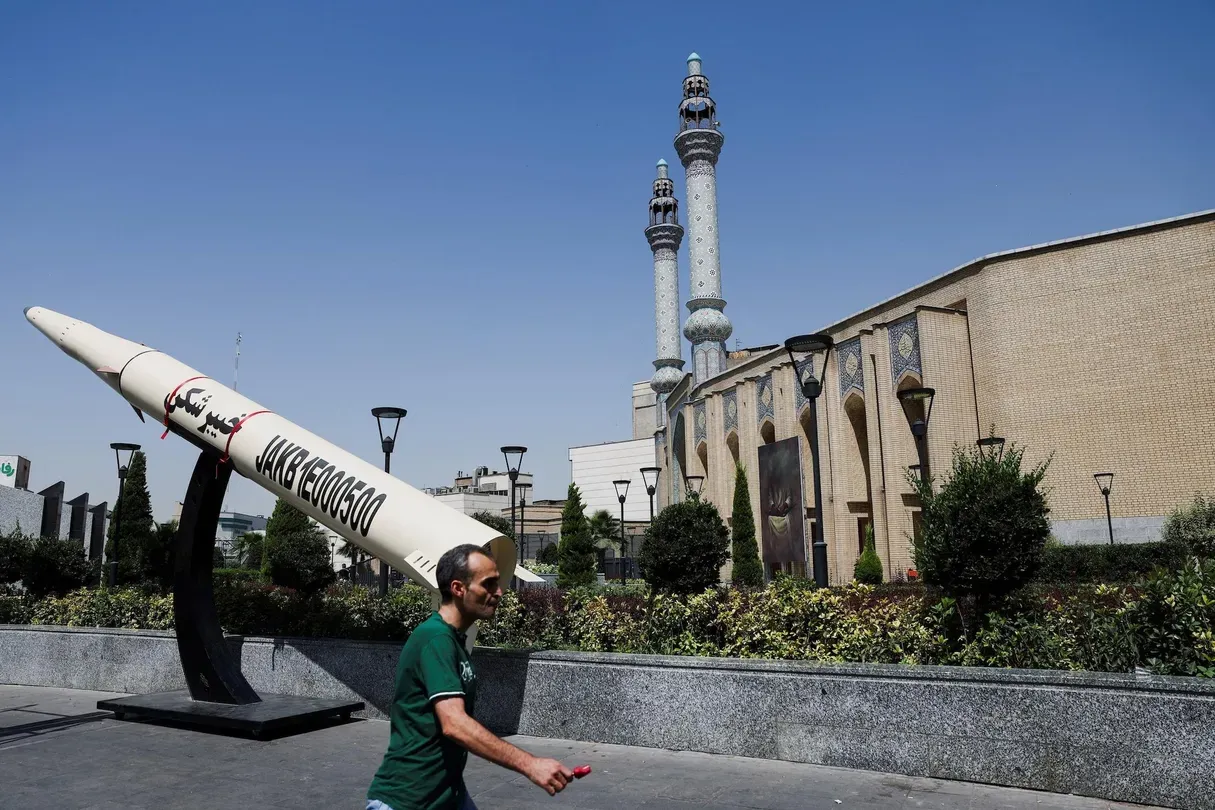
June 11, 2026 - PBS News Hour full episode
6/11/2026 | 57m 46sVideo has Closed Captions
June 11, 2026 - PBS News Hour full episode
June 11, 2026 - PBS News Hour full episode
Problems playing video? | Closed Captioning Feedback
Problems playing video? | Closed Captioning Feedback
Major corporate funding for the PBS News Hour is provided by BDO, BNSF, Consumer Cellular, American Cruise Lines, and Raymond James. Funding for the PBS NewsHour Weekend is provided by...
June 11, 2026 - PBS News Hour full episode
6/11/2026 | 57m 46sVideo has Closed Captions
June 11, 2026 - PBS News Hour full episode
Problems playing video? | Closed Captioning Feedback
Where to Watch PBS News Hour
PBS News Hour is available to stream on pbs.org and the PBS app.
Providing Support for PBS.org
Learn Moreabout PBS online sponsorshipAMNA NAWAZ: Good evening.
I'm Amna Nawaz.
GEOFF BENNETT: And I'm Geoff Bennett.
On the "News Hour" tonight: President Trump calls off a third night of strikes against Iran, citing progress on peace negotiations.
AMNA NAWAZ: Protests flare in Albania against a bid by Ivanka Trump and Jared Kushner to build a luxury resort on a protected island.
ALBI MIFTARI, Sazan Island Tour Guide: I'm a tour guide, and I'm going to that island like 60 times per year.
I want to go another 60 times more.
We need it.
It's ours.
We don't want to sell it.
GEOFF BENNETT: And SpaceX goes public, the first of three A.I.-driven companies launching massive IPOs this year.
(BREAK) GEOFF BENNETT: Welcome to the "News Hour."
President Trump this afternoon called off a third straight night of airstrikes on Iranian targets after saying this morning that he would order more such attacks.
AMNA NAWAZ: In the Oval Office, he said again that a deal was close between the U.S.
and Iran and that it might be signed this weekend.
Earlier, in a social media post, Mr.
Trump said he ordered the attack stand-down because of progress being made in negotiations.
Mr.
Trump has often claimed such progress.
Iran said no agreement has been finalized.
William Brangham unpacks a dizzying day to begin our coverage.
DONALD TRUMP, President of the United States: It's a great deal.
You know why it's a great deal?
Because they will never have a nuclear weapon.
WILLIAM BRANGHAM: In the Oval Office late this afternoon, another change of tune from the president.
DONALD TRUMP: They have all approved the deal.
Everybody's approved the deal.
Now we will get it finished up, and hopefully that will be done.
WILLIAM BRANGHAM: The president had earlier threatened continued airstrikes, but then relented.
DONALD TRUMP: We were going to hit them even harder tonight.
They knew that.
We told them exactly what we were going to do.
I really believe it's a regime change because I find these people to be much more rational than the people that are no longer with us.
We knocked out the first team of leadership.
The second team of leadership is a different group.
WILLIAM BRANGHAM: Trump said he'd spoken to Israeli Prime Minister Benjamin Netanyahu, who in a statement expressed appreciation for Trump's commitment to peace, but added that Israel is not party to this proposed interim deal.
The top spokesman of the Iranian Foreign Ministry, Esmaeil Baghaei, said no final decision had been made on an agreement and that Iran would not compromise what he called red lines.
He did say that much of the deal text had been finalized, but that American demands kept changing during the talks.
Last night, for a second night, U.S.
missiles streaked across Iran's skies, explosions echoing around its port cities, yet another demonstration that, despite a stated cease-fire, the fire never ceased.
U.S.
Central Command said it targeted several Iranian military sites in -- quote -- "response to Iran's unwarranted and continued aggression."
This morning on FOX News, the president said the strikes would continue and even escalate, threatening an attack on Kharg Island, the key site for Iran's oil exports.
DONALD TRUMP: My preference has always been take Kharg Island.
I don't know that America has the stomach for it, to be honest with you.
You're going to make a fortune.
WILLIAM BRANGHAM: But just a few hours later, the president reversed himself, citing progress in talks with the Islamic Republic that he claimed had been approved by -- quote -- "the highest level of Iranian leadership."
He wrote: "I have, as president of the United States of America, canceled the scheduled strikes and bombings against Iran this evening."
He added: "The naval blockade will remain in full force and effect until this transaction is finalized."
Kharg Island is located far from the Strait of Hormuz.
It sits across the Persian Gulf from two key American bases in the Middle East; 90 percent of Iran's oil exports pass through Kharg.
Early today, Iran's Revolutionary Guard Corps said it launched attacks on at least 18 U.S.
military targets and air bases across the Middle East, including in Bahrain, Kuwait, and Saudi Arabia.
Iran's Foreign Ministry today blamed the U.S.
for violating the cease-fire, calling the American strikes -- quote -- "acts of aggression."
MAN (through translator): The United States' legal and criminal attacks have effectively rendered meaningless the cease-fire of April 8, 2026.
WILLIAM BRANGHAM: In the meantime, the war's consequences continue to be felt around the world.
In a small town in India, a family mourned one of three soldiers killed in a U.S.
strike on an oil tanker in the Gulf of Oman earlier this week.
India's Foreign Ministry condemned the attacks, demanding that they must stop.
U.S.
officials said its military issued warnings before firing at the ship, accusing the tanker of trying to evade the U.S.
blockade.
This marks the ninth vessel American forces say they had to disable.
The back-and-forth strikes between Iran and the U.S.
brought global condemnation.
LIN JIAN, Chinese Foreign Ministry Spokesperson (through translator): China is seriously concerned about the current situation.
Resorting to the use of force will only further aggravate tensions, and military action cannot resolve the underlying issues.
WILLIAM BRANGHAM: The disruption in the Strait of Hormuz continues to royal global energy supplies and drive up fuel and other prices worldwide.
Back in Iran, city streets are plastered with reminders to hold fast in this conflict.
For some Iranians, hope for a resolution comes mixed with defiance.
HAMID REZA BANI EBRAHIMI, Tehran, Iran, Resident (through translator): They want our nuclear material.
Our scientists work so hard, and then enemies come and martyr them.
We shouldn't allow them to obtain this easily.
WILLIAM BRANGHAM: For the "PBS News Hour," I'm William Brangham.
AMNA NAWAZ: For perspective on all these developments, we get two views.
Retired Army Colonel Joel Rayburn served in the first Trump administration on the national security staff with a focus on Iran.
He's now at the Hudson Institute.
And Suzanne Maloney served on the State Department's policy planning staff during the George W. Bush administration.
She's now director of the foreign policy program at the Brookings Institution and focuses on Iran and the Gulf energy economy.
Welcome to you both.
And, Suzanne, kick us off here.
You saw the president cancel strikes on Iran just hours after threatening more.
He now says a deal is approved.
Do you believe him?
SUZANNE MALONEY, Brookings Institution: Well, thanks so much.
I don't know what to believe at this point.
It's been a pretty wild week.
And I think that what we have seen is that there have been negotiations under way for some time.
There has been much public talk, particularly by the president, that a deal is near.
But I think both sides also believe that the use of force can accelerate the negotiations or amplify their own position in those negotiations.
So I would expect that, even if we get to a first phase of any agreement, we're likely to see continued unrest and turmoil and potentially sporadic tit-for-tat exchanges like we have seen over the course of the past week.
AMNA NAWAZ: Joel, what about you?
What's your reaction?
Do you believe the president, when he says a deal has been approved?
COL.
JOEL RAYBURN (RET.
), Former Trump National Security Council Staff: Well, I believe that -- first of all, I believe he's an eternal optimist and he's going to cast things in a positive light.
And I think, from the U.S.
perspective, they feel probably and via Pakistani interlocutors and Qatari interlocutors that they have got the Iranian interlocutors in a place that's very close.
The problem is that the Iranian regime, of course, their pattern is to move the goalposts when they get into that zone.
Their pattern also is to appear accommodating when they're under severe military and economic pressure and then, as soon as that pressure is relieved, then to try to erase the red lines, soften the red lines.
So I think the devil's in the details here.
I also think that Lebanon is the issue on which the IRGC in particular might try to thwart a deal, move the goalposts, and try to hold on to Lebanese Hezbollah as an instrument.
AMNA NAWAZ: I want to get to Lebanon in just a moment.
But, Joel, to stick with you, to be very close to a deal is not what the president is saying.
He's saying a deal has been approved.
If you don't think we're there yet, what do you think it would take for the U.S.
to get Iran to a deal?
COL.
JOEL RAYBURN (RET.
): Look, if they are - - if the Iranians are ready to accept a deal that's acceptable to President Trump, then it can only be because last night he demonstrated something that I think they didn't believe before last night, which is that he's willing to return to the use of force.
So he reestablished, I think, the credibility of the threat of force.
There was also another very important revelation that he made yesterday, which is that essentially Project Freedom, which we all thought had been called off at the behest of the Gulf, and in anticipation that Iranians might retaliate a few weeks ago, that actually something like it has been continuing clandestinely.
And there's been some leakage of the Iranian blockade of the Strait of Hormuz, which also explains, I think, which if -- the Iranians have to take that into account.
They have to realize that their timetable, their pressure on trying to generate economic pressure in the global economy may be leaky.
So that could affect their calculus as well.
AMNA NAWAZ: Suzanne, you agree with that premise there that it would take additional U.S.
military force to push Iran to a deal, a final deal?
SUZANNE MALONEY: Look, I think the Iranians need and want to deal, but they want to deal on their terms, and they want to be able to set a new strategic equation across the region that includes their own hegemonic role.
And here we see, as Joel referenced, their efforts to try to insulate their proxies, to use their power to insulate their proxies, rather than using their proxies to extend their influence.
I think that tells you about their mind-set.
I don't think that whatever limited success Project Freedom might have had has really changed the extent to which Iran is capable of truly harming the global economy and creating ripple effects for the American economy.
We saw something like statistics of perhaps 200 ships that may have transited under some U.S.
guidance without their transponders on, and so there has been a bit of leakage.
But contrast that with 130 to 160 ships that were transiting the Strait of Hormuz prior to President Trump's decision to try to promote regime change through the use of military force on February 28 in Iran.
I think the reality is that economic pain is much tougher on the United States and the international economy.
The Iranians believe that they can be resilient because they have built an economy that has been structured to evade U.S.
sanctions and economic pressure over the course of the past 47 years.
AMNA NAWAZ: Joel, to that point of what Iran could agree to and what they are pressured to agree to right now, you mentioned Lebanon.
We reported earlier Prime Minister Netanyahu of Israel said they're not part of the deal.
If we take that to mean Israel's war in Lebanon continues, why would Iran agree to that after they have repeatedly tied the ending of that war to any deal with the U.S.?
COL.
JOEL RAYBURN (RET.
): I think what the Iranians will try to do is to reach a deal that basically is a trading of their blockade for our blockade, so that the Strait of Hormuz opens up, they get relieved of economic pressure and the blockade, but then they try to kick the can down the road on disposition of their nuclear program and certainly on things like their missile and drone capacity and, then most of all, Hezbollah.
I wouldn't say the rest of the proxies.
I think Hezbollah is so qualitatively different from the rest of the proxies.
Hezbollah is so important to the Revolutionary Guards, especially to someone like Ahmad Vahidi, who's the new commander of the Revolutionary Guards.
I think they will go very far, almost to the end, almost to collapse, in the service of trying to preserve Hezbollah, because Hezbollah is so important to their ideology, Islamic Revolution and their projection of power.
AMNA NAWAZ: Suzanne, is that kind of deal, one that would essentially reopen the Strait of Hormuz, but does not include specifications about the nuclear program, is that one worth the U.S.
signing?
SUZANNE MALONEY: Well, look, I think that's not the deal that President Trump would prefer to sign.
It's not the deal that any American president would prefer to sign.
But it is likely the deal that is on offer right now.
And we are coming to a point at which the physical disruption of energy supplies from the Gulf is going to begin to hit the entire global economy, not just Asia and Europe and jet fuel, but really here in the United States.
We have already seen the impact on gasoline prices, on inflation rates.
The president has a larger agenda that he's trying to advance.
And it is -- unfortunately, the miscalculations that informed the military campaign are ones that really can't be undone at this point.
The challenge you will have is moving from a reopening of the strait, however modest and incremental it may be, to a meaningful nuclear agreement that constrains Iran's capacity to move toward weapons capability.
It took two years to negotiate the 2015 deal.
That was 159 pages of very dense text.
I don't think that this administration necessarily has the patience to engage in something that detailed, and we're going to have to see what the Iranians are prepared to really put on the table with respect to the nuclear program.
AMNA NAWAZ: Joel, I will give you the last word here in less than a minute or so we have left.
On that miscalculations point, the U.S.
has miscalculated before on how long this would take, on how much economic and military pressure Iran could sustain, on whether or not there would be infighting in the regime.
Could they be miscalculating again?
COL.
JOEL RAYBURN (RET.
): Well, listen, I think actually of the two parties, the one that's more prone to miscalculation, misjudgment and overreach is the Iranian regime.
They're very insular.
I don't think they understand the world beyond their borders very well.
They certainly don't understand the U.S.
And they have misjudged President Trump over and over again.
Look at back at the time, for example, of the Qasem Soleimani raid.
Qasem Soleimani and the supreme leader didn't think the President Trump was going to use military force in that case.
I think last night he tried to dispel them of that miscalculation in order to set the table for the deal.
So I would look more of miscalculation on their side than on ours.
AMNA NAWAZ: Joel Rayburn, Suzanne Maloney, thanks so much to both of you for joining us tonight.
GEOFF BENNETT: We start the day's other headlines in the Midwest.
Thousands remain without power after severe storms swept through the region, disrupting travel and causing at least one death.
And more bad weather is in store tonight, with Chicago and Milwaukee among those at the highest risk of hail, damaging winds and even tornadoes.
Earlier today, blinding sheets of rain and hail hit parts of Minnesota.
The storms peeled off part of a roof outside Chicago and toppled trees and power lines from Wisconsin to Ohio.
And then there's the heat.
More than 80 million Americans are facing potentially dangerous temperatures and high humidity through the weekend, especially along the East Coast.
The gunman who killed Minnesota House Speaker Melissa Hortman and her husband, Mark, pleaded guilty today in federal court.
Vance Boelter agreed to a deal with prosecutors that would spare him the death penalty.
The 58-year-old was disguised as a police officer when he went to the Hortmans' home last June and carried out the attack.
He's also charged with the nonfatal shootings of state Senator John Hoffman and his wife.
The attacks added to nationwide concerns over politically motivated violence.
As of today, the war in Ukraine has now officially lasted longer than World War I. It's been more than four years and three months since Russian President Vladimir Putin sent troops into Ukraine.
Many thought the country would fall within days.
The conflict has also drawn comparisons to World War I, especially the return of trench warfare, grinding artillery battles, and front lines measured in yards rather than miles.
There is no end in sight to the present-day war.
Just today, flames spewed from this apartment building in Southern Russia after an overnight drone attack.
Also today, Britain's Defense Secretary John Healey resigned unexpectedly.
He cited low military spending at a time of what he called rising threats, including from Russia.
The Interior Department says it's investigating what appears to be a large anti-Trump message appearing in dead or discolored grass of the National Mall in Washington, D.C.
Seen from above, the faint outline of the numbers 8647 can be seen; 86 is slang for remove or to get rid of something, and Trump is the 47th president.
Officials say they take any threat against the president very seriously; 8647 is the same term that former FBI Director James Comey once shared on social media spelled out in shells.
He's been charged with making threats against the president, which he denies.
On the South Lawn of the White House, a giant octagon cage is now ready for this weekend's UFC event.
The mixed martial arts fight is timed for President Trump's 80th birthday and is part of celebrations for the 250th anniversary of American independence.
Secretary of State Marco Rubio and UFC head Dana White signed a partnership today, formally recognizing the sport as a tool of American diplomacy.
And the venue itself was open to the press today, with the "News Hour"'s Liz Landers getting a sneak peek.
LIZ LANDERS: This arena right here is going to hold more than 4,000 people.
Another 120,000 people will be in other places on the South Lawn and in the Ellipse here.
The cost of this, around $60 million.
We have learned that seven federal agencies, including the FAA and the Department of Homeland Security, have been involved.
GEOFF BENNETT: A lawsuit was filed this past weekend by two Virginia residents who say the administration ignored federal rules about hosting public events on government property, but it's not expected to derail Sunday's fight.
In New York City, the Knicks are now just one win away from their first championship in more than 50 years after staging the biggest comeback in NBA Finals history.
This tip-in by O.G.
Anunoby sealed the win after the Knicks eliminated a 29-point deficit against the San Antonio Spurs.
That set off an eruption among fans inside Madison Square Garden and beyond.
(CHEERING) GEOFF BENNETT: Fans cheered fans danced, cheered and sang in celebration, but some scenes turned rowdy, with police arresting dozens of people.
The Knicks now lead the best-of-seven series three games to one.
They head to San Antonio for game five on Saturday.
On Wall Street today, stocks rebounded after President Trump called off his threats to strike Iran tonight.
The Dow Jones industrial average surged nearly 1,000 points, the Nasdaq jumped more than 600 points, or 2.5 percent.
The S&P 500 posted its best day in two months.
Still to come on the "News Hour": President Trump taps U.S.
attorney Jay Clayton as director of national intelligence after a standoff with Congress; Pulitzer Prize-winning reporter Devlin Barrett details the transformation of the Justice Department under the Trump administration; and the World Cup kicks off with a challenge, how to contend with dangerously hot weather.
AMNA NAWAZ: The president has made his permanent pick to oversee U.S.
intelligence.
And the choice comes as a key surveillance tool is about to expire.
The Foreign Intelligence Surveillance Act, or FISA, powers must be authorized by tomorrow night.
But Congress has refused, with concerns over privacy and the interim intelligence chief Trump appointed previously.
Our congressional correspondent, Lisa Desjardins, is here with more.
So, Lisa, where do things stand with this intelligence program?
Is it going to expire?
LISA DESJARDINS: Almost certainly, it will.
As you say, it's slated to expire tomorrow night at midnight.
Today, the House failed to pass a short-term extension.
It didn't even get a majority vote; 19 Republicans and most Democrats voted against it.
And then the House left for a week.
So that's really basically the endgame for FISA being extended right now.
The president is offering one idea.
He says he might be able to extend it by executive order.
However, it's not clear that's legal or that private companies would really acknowledge it.
AMNA NAWAZ: But another thing is, just before, hours before the House left, the president did something Speaker Johnson and others have been urging him to do to help break that standoff over FISA.
He named a nominee as his permanent pick for the director of national intelligence.
Tell us more about him and why that matters.
LISA DESJARDINS: He's not a traditional national security figure.
But who he is right now is the U.S.
attorney, the federal prosecutor in Manhattan.
Now, he has there handled terrorism and national security cases.
Now, Jay Clayton was involved with the review of the Epstein documents.
He was in charge, in fact, Amna, of making sure to protect victims' identities.
That's something that has been controversial.
In addition, he is someone who's known as a confidant of President Trump.
He golfs with him.
He's also a vocal supporter.
In fact, just this week, he echoed Trump's baseless claims that the California election should be questioned as fraudulent.
Now, how will he do in Congress?
Well, interestingly enough, tonight, the ranking Democrat on the House Intelligence Committee, Jim Himes, has said he's a terrific choice.
But he also said this choice comes too late, because Democrats still object to the man who is about to be in the job in a short-term way.
That is Bill Pulte, who we have talked about before.
He right now runs the federal housing programs Fannie Mae and Freddie Mac.
He has no national security experience at all.
And that is, by the way, required by law to be in that position.
So here's the thing.
Why this is all affecting FISA?
To pass this FISA authorization, Democrats are needed in both the House and the Senate.
They see Bill Pulte as a problem for national security.
There's some Republicans who have civil liberties concerns.
Together, that's blocking everything up probably until Jay Clayton can be confirmed.
The Senate's moving fast.
Already, we just in the past few minutes heard he's got a confirmation hearing next week.
AMNA NAWAZ: And remind us that FISA, this intelligence program, especially the warrantless section, how does it work?
LISA DESJARDINS: Yes, this is one of these things I think people have trouble understanding, but you can simplify it.
This is called Section 702.
This is the one that gets the most attention.
It's a powerful piece of law.
It allows the FBI and other U.S.
agencies to gather communications, phone calls, e-mails from foreign sources overseas, only foreigners.
It, by law, is not supposed to collect data on Americans or people in this country.
However, we know sometimes it has.
And that's the civil liberties concern.
The Intelligence Committee, Amna, says that this program is responsible for 60 percent of what's in the president's daily briefings.
FISA has never had even more than a few days of a problem being extended.
AMNA NAWAZ: So, if or when it expires, what does that practically mean?
LISA DESJARDINS: Yes, we spend a lot of time trying to search this out.
There is really actually a debate over this.
Let's first talk about what we know.
FISA's search parameters under 702 make it so that it is allowed -- it is confirmed for a year and when it is put into operation.
Now, that happened in March.
So, current orders, all of that, in theory, mean that all of the current search parameters are allowed for another year.
But there is a concern that telecommunications companies, AT&T, T-Mobile and all of those, may think that that doesn't protect their liability.
This has come up in the past.
I reached out to some of them.
T-Mobile got back to me and they said, we are closely reviewing and monitoring this situation.
So they're not committing to whether or not they will still give the data that the U.S.
needs.
It's going to be a real question for our intelligence agencies.
Now, some see this, of course, as being very dangerous in a vulnerable time.
Here's Senate Leader John Thune.
SEN.
JOHN THUNE (R-SD): At a time when we're hosting the World Cup, we got 250th anniversary celebrations going around this country.
This is a time of risk for the American people.
And so we're going to shut the lights off on this program and put at risk the American people.
LISA DESJARDINS: But others disagree and say that there are other programs that can be used and that much of what's happening now can still happen.
This is Pat Eddington of the Cato Institute.
PATRICK EDDINGTON, Cato Institute: The lapse of that will create a slight issue ultimately for the U.S.
intelligence community, but not something that people should be completely freaking out about or engaging in a lot of kind of over-the-top rhetoric, as we have seen a lot of House and Senate members do.
What I think is important about this, to kind of understand, is that not all the FISA goes away here.
LISA DESJARDINS: Bottom line, this will expire, and we don't really know how dangerous it will be.
AMNA NAWAZ: All right, congressional correspondent Lisa Desjardins, thank you so much.
LISA DESJARDINS: You're welcome.
GEOFF BENNETT: White sand beaches, blue waters, flora and fauna.
The Island of Sazan is a jewel in the Adriatic Sea, the westernmost point of Albania.
But the former Cold War era base is now in a vibrant nature preserve.
It's also an inviting prospect for real estate developers, chief among them, Ivanka Trump and her husband, Jared Kushner.
And their plans are running headlong into Albanians, who want to keep what's theirs.
Special correspondent Simon Ostrovsky and producer Katia Patin report now from Albania on a small island at the center of a big controversy.
SIMON OSTROVSKY: It's week two of the biggest protests in Albania in years.
And most of the people out here want to speak out against corruption in their government.
But there's also a sense of disappointment with Albania's biggest ally, America, and the way members of Donald Trump's family are treating this country.
This is the video that sparked the uprising people are now calling the Flamingo Revolution.
Private security guards violently detain an activist protesting against a luxury development in a protected nature preserve that is a home for the iconic pink bird.
It's a luxury development that U.S.
President Donald Trump's daughter Ivanka and son-in-law Jared Kushner are backing.
In 2024, Kushner shared these renderings of the lavish proposal on his Instagram account.
IVANKA TRUMP, Daughter of President Trump: You know, it's not even a business for me, despite the scale of it.
SIMON OSTROVSKY: But the plans didn't generate a lot of international attention until recently, when Ivanka made an appearance on a podcast that angered the citizens of this economically struggling Balkan nation.
IVANKA TRUMP: Not only the island, but we have five miles of beachfront directly across from the island, this beautiful peninsula with a lagoon on one side, the ocean on the other, beautiful white sand beaches.
SIMON OSTROVSKY: But those white sand beaches are on protected land.
And the island, it's not private.
It is in fact public property.
The couple's attempts to appropriate it have elicited much anger here.
But Ivanka's claims that she accidentally stumbled upon it have generated even more eye rolls.
DEA DERVISHI, Student: She said she discovered the island, but the island belongs to us.
SIMON OSTROVSKY: How did it make you feel when you saw her talking about the island?
DEA DERVISHI: I was mad, because the island is ours, not hers.
IVANKA TRUMP: It's an unbelievable beautiful 1,400-hectare private island in the middle of the Mediterranean.
We were on a friend's boat and we stopped for a swim.
Effectively, that's how we found it.
ALBI MIFTARI, Sazan Island Tour Guide: She discovered the island, right?
(LAUGHTER) SIMON OSTROVSKY: Yes.
ALBI MIFTARI: That was very funny and sad at the same time.
Well, we have only one island.
SIMON OSTROVSKY: Yes.
ALBI MIFTARI: And I'm a tour guide, and I'm going to that island like 60 times per year.
SIMON OSTROVSKY: OK.
ALBI MIFTARI: I want to go another 60 times more.
We need it.
It's ours.
We don't want to sell it.
SIMON OSTROVSKY: Blerjana Bino heads a think tank in Albania's capital, Tirana.
She told the "News Hour" Albanians were most concerned with the opacity of the proposal and that the government of Prime Minister Edi Rama had quietly worked with Kushner and Trump to make this project possible.
BLERJANA BINO, Center Science and Innovation for Development: Ivanka Trump comes to Albania, has this private visit, meets privately with the prime minister and with architects.
What is this project?
What is the plan of the government?
Who is this investor?
We saw construction work there.
That's why environmentalists protested and citizens protested, but there was no permission.
There was no official documentation.
For us, as citizens of Albania, this is an issue that has to do with this system, this political elite, and the lack of transparency and accountability that affects our daily lives.
SIMON OSTROVSKY: The podcast appearance of Ivanka Trump was kind of just the straw that broke the camel's back?
BLERJANA BINO: The anger has built up for a long time.
The inclusion of Jared Kushner in Ivanka Trump, it's like the symbol that made it something that could not be bearable anymore.
SIMON OSTROVSKY: Albania may be small, but its love for America is big.
This tiny country regularly polls as one of the most pro-American nations in the world.
It contributed 3,000 troops to America's war on terror.
And, at the U.N.
it votes in lockstep with the United States.
But this foray into the local real estate market by the president's son-in-law, who also doubles as a special envoy for peace, has started to tarnish more than just the Trump family name.
SOKOL HAZIZI, Sazan Project Protester: You know, there's been tension in the crowd between people protesting and people holding American flags.
SIMON OSTROVSKY: Yes?
SOKOL HAZIZI: Because, basically, what we are against right now is this American investment, if that's what it is.
But we are we are against the president's daughter and his son-in-law investing in our country.
SIMON OSTROVSKY: People here for a long time looked up to America.
Do you think they still look up to America in the same way?
SOKOL HAZIZI: What Albanian people and most of European people love about America is their principles, so the land of the free and democracy.
It is very sad to see the American government not stand up to them.
SIMON OSTROVSKY: Albanians expect more from one of their closest allies, says Robin Brooks.
She's a global policy professor and a former U.S.
National Security Council director for the Balkans and Central Europe.
ROBIN BROOKS, Former U.S.
National Security Council Director: So, we have extreme influence in this country that has predicated on what historically has been our shared values and our shared commitment to democracy, democratic institutions and rule of .
So, when the United States is investing in a way that is not transparent and seems potentially to violate Albanian law, it tarnishes our image with the people of Albania and with -- and our ability to exercise that leverage in the future.
SIMON OSTROVSKY: For now, the billion-dollar project continues, as the White House claims the private business activities of Kushner and the president's daughter have nothing to do with the administration.
That's no consolation for people like Joni Vorpsi.
He's an ecologist with an environmental watchdog in Albania and showed me around the protected area.
JONI VORPSI, Protection and Preservation of Natural Environment in Albania: It's a city, 10,000 rooms.
SIMON OSTROVSKY: It's going to completely alter the face of this entire place.
JONI VORPSI: Yes, so we don't talk anymore about negative effects on nature.
It's wiping out nature.
And we're talking about the only island that Albania has.
SIMON OSTROVSKY: Repeat that again.
You're saying this is Albania's only island and that's the one they want to make private?
JONI VORPSI: Yes, exactly.
SIMON OSTROVSKY: That only island is now at the center of furious public debate, as many here fear for the future of one of the country's most pristine places.
For the "PBS News Hour," I'm Simon Ostrovsky in Zvernec, Albania.
GEOFF BENNETT: SpaceX, the rocket company founded by Elon Musk, will be going public on Friday and is expected to become the largest initial public offering, or IPO, in stock market history.
With the sale of more than 555 million shares, Musk and the company are looking to raise roughly $75 billion.
That would raise the company's valuation to about $1.7 trillion, automatically making it the world's most valuable publicly traded company.
Nasdaq and larger index funds will also allow trading and investing in this company much earlier than normal, within three weeks.
Individual investors alone have already requested more than $70 billion worth of shares.
There are lots of questions about all of this.
And, for more, we are joined now by Ron Insana, MS NOW senior business analyst and author of The Message of the Markets on Substack.
Ron, it's always good to see you, especially on a day like this, as we await this IPO.
What is it about SpaceX that investors are willing to value it at a level we have never seen before?
RON INSANA, MS NOW: Well, I think to give Elon Musk a great deal of credit for being an innovator and a business genius, if you will, having taken over Tesla in its early days, having built out Starlink, which is one of the key components of SpaceX going public, and having very successfully built and launched rockets into space at a fraction of the cost that we have seen others see their attempt in the private sector or even in government operations as well.
So they're banking on his vision of the future, where we're going to have data centers in space that will provide power for artificial intelligence operations, and hoping that he can grow into that $1.7 trillion valuation, which might actually be larger tomorrow once the stock starts to trade, and deliver the types of revenues and profits that would support a valuation that high.
GEOFF BENNETT: Well, right.
After reading the prospectus, my question to you was, are investors buying the company as it exists today or a vision of what it could become?
And at what point is optimism just become speculation?
RON INSANA: Well, I mean, I think the two go hand in hand.
And they are certainly buying the vision.
They are not buying the company as it exists today, with about $18 billion in revenue and last year lost about $4.2 billion from operations.
So, no, this is not the type of company, if you look at it from an earnings perspective, that you would accord a $1.7 trillion valuation.
They're hoping that they can grow into that number, as some other companies have, obviously, whether it's Microsoft or whether it's Google's parent, Alphabet, Nvidia.
That's happened over an extremely long period of time.
This is happening much more quickly.
There are concerns, of course, that this is part of a speculative frenzy that's going on with anything associated with artificial intelligence and that the valuation on this, which, when taken in sum, is larger than the market valuation of all the IPOs I believe we have seen since the year 2000.
So this is a very big deal, and people are going to make their bets and see whether or not in the long run that vision will be fulfilled.
GEOFF BENNETT: Well, right, on your Substack and on your TikTok videos, you have been warning retail investors to be careful.
What should regular investors know, especially folks who are interested in buying shares or at least trying to get shares?
RON INSANA: Well, if they have already gotten an allocation, they have gotten that allocation at the price of $135, which was set officially today.
What often happens, and we have seen this, the chief investment officer at Truist pointed out that from the top price that you see early in initial public offering for hot stocks like this, whether it was Meta or Alibaba or some of the other big tech names that we know, a year later, those stocks were down on average about 55 percent.
So there are some restrictions on flipping for individual investors, which means buying it and selling it immediately after the IPO.
But they should be prepared for a fair amount of volatility unless you see just a surge in revenues, a surge in profitability at SpaceX that would support the valuation that may exceed $2 trillion tomorrow.
We're not quite sure exactly where it's going to open.
Some estimates are as high as $165 a share, which would provide individuals with the instant profit.
Remember also, there are a lot of early investors who are taking profits from their initial investments in SpaceX and the other components of that company.
They too are exiting.
So you don't want to be the bad holder if indeed this does not live up to its expectations.
GEOFF BENNETT: Meantime, OpenAI and Anthropic are also preparing to go public.
Are we witnessing the beginning of a new A.I.
investment cycle similar to previous technology booms, or is this something else entirely?
RON INSANA: Well, I think we're in the middle of one.
And, again, this already dwarfs kind of the capital requirements that we saw even in the build-out of the railroads in the 1870s in the United States.
This is an enormous capital commitment.
At least, this year alone, we will see about $800 billion put to work for data centers and other A.I.
infrastructure necessities.
Some are estimating that we can see a trillion dollars spent next year.
Now, whether or not that comes to pass remains to be seen.
The one caveat I'd put on this is that it's not just these companies selling equity in their firms to raise money.
They're also using a fair amount of debt, which, again, if the companies don't live up to their profit revenue expectations, we could see a financial market event down the road.
If they cannot service that debt or if they don't meet earnings expectations, that could harm their stocks rather significantly.
So I think individuals really need to do some serious homework around this and make sure that they're not in the midst of an investing mania and instead making very rational decisions about how much money they allocate to these A.I.
plays.
GEOFF BENNETT: Ron Insana, MS NOW senior business analyst and author of The Message of the Markets on Substack.
Ron, always a pleasure.
Take care.
RON INSANA: Same, Geoff.
AMNA NAWAZ: Pulitzer Prize-winning reporter Devlin Barrett of The New York Times has covered federal law enforcement for more than two decades.
His new book pulls back the curtain on Trump's Justice Department and the way the president has used it as a tool to settle political scores.
I spoke earlier today with Devlin about that book, "The Department of Revenge."
Devlin Barrett, welcome to the "News Hour."
Thanks for being here.
DEVLIN BARRETT, Author: Hi.
Thanks, Amna.
Thanks for having me.
AMNA NAWAZ: So one of the key points underpinning all your reporting in the book is how different President Trump's approach is to the Department of Justice in his second term as compared to his first.
You write in the book: "His rage against the Justice Department was also deeply personal, a visceral instinctive reaction to his own experience."
What did you mean by that?
DEVLIN BARRETT: I mean, I have covered federal law enforcement for a very long time.
And one of the things you see happen over and over and over is, when a person is charged by the government, when a person is investigated by the government, that person also comes out of that experience very angry and bitter about what happened to them.
And I think one of the things that is really important about understanding what Trump is doing to the Justice Department and why is that he is a former criminal defendant who is now in charge of these agencies.
And he is still very angry and very suspicious of federal law enforcement.
AMNA NAWAZ: He describes himself at one point as the hunter now.
And within the DOJ, you report that officials there would refer to the president as the department's chief client.
What does that come to mean in terms of how they approach and do their work?
DEVLIN BARRETT: If you think about the department, the Department of Justice is different than all the other agencies in the government.
It's not like the Department of Agriculture.
It's not like the Department of Commerce, because the Department of Justice is tasked with enforcing the criminal laws of the country, basic issues of right and wrong.
And when people join the Justice Department or join the FBI, they take an oath to defend the Constitution.
What's so different about what is happening in the Trump Justice Department right now is that all those lawyers and all those agents are being told very explicitly, your oath to the Constitution means you must always do what the president wants.
And that has never been how that oath has been interpreted before.
And so that's why so many Justice Department people have left, some have been fired, and that's why there's so much turmoil inside the department.
AMNA NAWAZ: There's a new detail in the book I want to ask you about, a never-before-released secret recording of a meeting in which Emil Bove, you said, suggested that people who signed off on a motion that would dismiss this action against then-New York City Mayor Eric Adams, if anyone signed that motion, they could get a promotion.
Tell us about what happened there.
DEVLIN BARRETT: Right.
So there's a confrontational meeting early into the Trump administration, when Emil Bove meets with the Public Integrity prosecutors, a very important part of the Justice Department that handles corruption cases.
And, basically, he's at that moment of that meeting, he's already forced out a number of federal prosecutors in New York because he's trying to end a criminal case against New York Mayor Eric Adams.
AMNA NAWAZ: And they were forced out because they refused to sign.
DEVLIN BARRETT: They refused to go along with that.
They refused to put their names on a motion to dismiss their own case, saying that was wrong and they wouldn't be a part of it.
So then Emil Bove takes that same demand to the Public Integrity prosecutors.
And, in a meeting, he says, I will give you an hour, but I want two people to sign this motion.
And he really wants career prosecutors to do it.
It's important to him to have careers do it.
And he says, whoever signs this will emerge as leaders of the Public Integrity Section.
And my reporting shows that everyone in that conversation understood that to mean, if you sign this document for me in this very contentious issue in this case, I will promote you.
AMNA NAWAZ: And is there evidence that happens?
DEVLIN BARRETT: Yes, because the person who ultimately agrees to sign the motion, who does it for, I think, some understandable, not dishonorable reasons, that person does become promoted.
That person is running what's left in the Public Entirety Section today.
AMNA NAWAZ: And the recording is important because Bove is asked about this in congressional hearings.
What does he say?
First, he says he doesn't understand the question.
Then he says he doesn't remember.
But finally, he says, no, he didn't do that.
And that's really important, because the recording is clear.
And I know people who were in their original meeting who watched Bove's testimony.
And in that moment, those people certainly believed that Bove wasn't telling the truth to Congress.
AMNA NAWAZ: Can you give us a sense of what's happening among the career attorneys around these kinds of instances?
It's not the only one you document, in which people are pressured to sign off on things or take steps that they say are unethical or there's no evidence for, right?
AMNA NAWAZ: And yet they always seem to find someone who will sign off on something or will move forward with the prosecution.
So what's happening with the attorneys at this point?
DEVLIN BARRETT: What you see time and again is, career prosecutors saying you don't have the facts to support the charges you want to file here under the law, and the political leadership of the department pushing and saying, file the charges, find a way, get it done.
And what you see time and again, repeated, is that the people running the Justice Department, in a certain sense, are on a kind of fishing expedition.
That term historically means prosecutors who are just looking for dirt, and they don't have a good reason to investigate.
They're just looking for dirt.
This, I would say, is a different kind of fishing expedition.
This is a fishing expedition for prosecutors who are willing to lower standards and to charge cases that other career prosecutors will not charge.
AMNA NAWAZ: You also report on how badly depleted the work force has been within the department.
Can you quantify it?
What would you say is the current status of the Justice Department?
DEVLIN BARRETT: I mean, parts of the Justice Department are functioning almost like ghost ships at this point.
They are so understaffed and a lot of the people in charge are fairly green, fairly inexperienced.
And there has been a tremendous exodus of legal experience, legal talent.
So, for example, more than half of the lawyers in the Civil Rights Division have left.
If you look at the Criminal Division, one out of five of the lawyers there have left.
If you look at individual sections like, for example, the National Security Division, they have lost a tremendous amount of the senior lawyers.
And in that division especially -- you're talking about terrorism and espionage cases -- it's hugely important to have people who have done a lot of terrorism and espionage cases before.
And so there's a tremendous lack of personnel now within the department.
And the result of that really is, you have a great more uncertainty in the department.
You have a lot more confusion in the department as to who's doing what and why.
And you have -- one person described themselves and their colleagues as mole people, just trying to stay out of the eye of the leadership of the department.
And I would like to make one thing clear, which is that there are still a lot of very smart, very ethical people doing very good work in the Justice Department and the FBI.
There are a lot of things that the Justice Department and FBI do that really don't deal with corruption or political issues or anything like that.
And there's a lot of good work being done in those areas.
But I think, even in those areas, you talk time and time again to lawyers and agents who are terrified that any day they could get a call assigning them to some case that makes no sense and feels wrong,and they are told they have no choice but to obey.
AMNA NAWAZ: The book is "The Department of Revenge."
The author is Devlin Barrett.
Devlin, thank you so much.
DEVLIN BARRETT: Thanks, Amna.
GEOFF BENNETT: The World Cup kicked off in Mexico today, as South Africa squared off against Mexico, which is one of this year's host countries.
Matches get under way tomorrow in the two other hosting countries.
That's the U.S.
and Canada.
Notably, several American cities hosting these opening matches will be sweltering this weekend, making stadiums feel more like a sauna than a playing field.
The heat and humidity can take a major toll on player performance and fan safety.
Climate Central's Ben Tracy shows us how extreme heat is changing the game in our warming world.
It's part of our series Tipping Point.
MARISA ABEGG, Former Professional Soccer Player: Follow through where you want the ball to go.
Perfect.
BEN TRACY: Marisa Abegg has always gotten her kicks on the soccer field.
MARISA ABEGG: You're going to take that touch across your body and then pass it back.
Kept me sane as a kid.
Got to run around a ton.
BEN TRACY: For her, the World Cup was must-see TV.
MARISA ABEGG: I didn't even really know what Super Bowl was growing up, right?
The '99 World Cup was absolutely my Super Bowl.
ANNOUNCER: Abegg clears it.
BEN TRACY: She played two seasons of professional soccer, where sometimes the rivalry got too heated.
ANNOUNCER: And a sliding tackle from Abegg.
MARISA ABEGG: You just know how miserable it is to run around in hot weather, because it plays such a huge impact on the way you play.
BEN TRACY: This summer, extreme heat could be a real risk for both players and fans at the World Cup.
DOUGLAS CASA, CEO, Korey Stringer Institute: It has the potential to be some of the most extreme environmental conditions for soccer in the history of America.
BEN TRACY: Doug Casa runs the Korey Stringer Institute named after the NFL player who died from heatstroke in 2001.
DOUGLAS CASA: Pick the population.
If they have to do their job or sport in the heat, we're studying them.
BEN TRACY: Inside their heat labs at the University of Connecticut, researchers study how athletes and workers can stay safe and still perform in extreme conditions.
Before the 2021 Tokyo Olympics, the U.S.
women's national soccer team trained here to prepare for Japan's oppressive heat and humidity.
Which World Cup sites are you most concerned about?
DOUGLAS CASA: Without question, Miami.
It could easily be a 100-degree day and 80 percent humidity.
BEN TRACY: Climate Central analyzed temperature trends at all 16 World Cup sites, including this outdoor stadium in Miami, which now sees 14 more extremely hot June and July days due to climate change.
Heat and humidity push an athlete's core body temperature higher, giving those playing indoors an edge.
DOUGLAS CASA: Because, if your temperature is lower, they just perform better.
They can cover more distance, have more sprints, faster sprints.
All of those things can happen if you're less dehydrated and you're less hyperthermic.
BEN TRACY: So you're blowing heat into the room right now to make this uncomfortable?
REBECCA STEARNS, COO, Korey Stringer Institute: Yes.
BEN TRACY: I can feel it.
REBECCA STEARNS: Here we go.
BEN TRACY: KSI chief operating officer Rebecca Stearns showed me how quickly heat can impact performance... REBECCA STEARNS: In the heat, your heart rate is showing much higher stress.
BEN TRACY: ... by cranking up my pace and the temperature.
REBECCA STEARNS: So, right now, the room is about 100 degrees.
BEN TRACY: So it's like going for a run in Phoenix.
REBECCA STEARNS: Yes.
BEN TRACY: The test measures how fast my body heated up.
REBECCA STEARNS: And your body temperature right now is 102.5.
BEN TRACY: All right, so that's toasty.
REBECCA STEARNS: Yes.
BEN TRACY: We don't want to go above 104.
REBECCA STEARNS: One hundred and four is the max.
BEN TRACY: Above that, the risk of heatstroke rises, potentially leading to organ failure or even death.
DOUGLAS CASA: The outcome of our heatstroke all boils down to the number of minutes that the body is above approximately 105 degrees.
We literally don't know of anyone yet on planet Earth who's ever died from a heatstroke if their temp gets under 104 within 30 minutes.
BEN TRACY: Casa says a World Cup heatstroke is unlikely, but believes FIFA's new three minute hydration breaks don't go far enough.
DOUGLAS CASA: That is just absolutely not long enough to have an impact.
My suggestion would make that five or six minutes.
BEN TRACY: Players have been trying to acclimate to warmer temperatures before the tournament begins.
FIFA says it's limiting outdoor matches during the hottest parts of the day and adding cooling areas for fans.
But Casa is still concerned for stadium workers and spectators, especially those in sunbaked locations like Miami.
DOUGLAS CASA: I believe two of their games are happening at 5:00 p.m., but because we're near the summer solstice, 5:00 p.m.
is basically like the middle afternoon in Miami.
And so a big chunk of the stadium is still going to be in full sun.
So I ask myself, a game that's scheduled for 5:00 p.m., why are we not playing at 8:00 or 9:00 at night?
MARISA ABEGG: Look at you.
Oh, my gosh.
Is your name actually Mia Hamm?
(LAUGHTER) BEN TRACY: Marisa Abegg is now coaching youth soccer.
MARISA ABEGG: Nice.
BEN TRACY: Just before our interview, she canceled practice because of a heat wave.
MARISA ABEGG: I think it's just going to play more and more of a role as we go forward.
BEN TRACY: She still has World Cup fever, but is trying to keep it cool.
MARISA ABEGG: I think we're going to a game in Boston in June, and I'm already considering, like, well, what's the temperature going to be like?
BEN TRACY: Do you feel for these teams that are going to have to play in Miami in the middle of the summer?
MARISA ABEGG: Oh, my gosh, 100 percent.
Like, I don't even want to watch in that weather, right?
BEN TRACY: For the "PBS News Hour," I'm Ben Tracy with Climate Central.
AMNA NAWAZ: Be sure to tune into a special one-hour edition of "Washington Week" tomorrow night.
NARRATOR: America celebrates its 250th birthday, and we take stock of this extraordinary time in our nation's history.
DONALD TRUMP, President of the United States: This July 4, we will mark 2.5 centuries of liberty and triumph.
per hour.
NARRATOR: Join moderator Jeffrey Goldberg and six of the country's top journalists for a special hour-long discussion in front of a live studio audience for "Washington Week With The Atlantic: The Next 250" Friday June 12 at 8:00 p.m.
AMNA NAWAZ: And join us again back here tomorrow night for a conversation with Bruce Springsteen on the opening of his new American Music Center and how he sees his place in the continuum of American song.
And that is the "News Hour" for tonight.
I'm Amna Nawaz.
GEOFF BENNETT: And I'm Geoff Bennett.
For all of us here at the "News Hour," thanks for spending part of your evening with us.
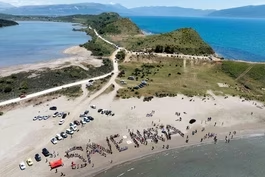
Kushner-Trump resort plan sparks protests in Albania
Video has Closed Captions
A look at the Albanian island where a Kushner-Trump resort plan has sparked protests (7m 25s)

Middle East experts assess prospects for U.S.-Iran deal
Video has Closed Captions
Middle East experts assess prospects for U.S.-Iran deal (8m 40s)
New book explores Trump's use of DOJ to settle scores
Video has Closed Captions
'The Department of Revenge' explores Trump's use of DOJ to settle political scores (8m 6s)
Spy program set to expire as Congress rejects FISA extension
Video has Closed Captions
Surveillance program set to expire as Congress rejects FISA extension (5m 41s)
Trump calls off strikes, says deal with Iran is close
Video has Closed Captions
Trump calls off threatened strikes, says deal with Iran is close (5m 20s)
Why SpaceX is rocketing toward largest IPO in history
Video has Closed Captions
Why SpaceX is rocketing toward largest IPO in stock market history (6m 13s)
World Cup players challenged by dangerously hot weather
Video has Closed Captions
World Cup players challenged by dangerously hot weather (5m 22s)
Providing Support for PBS.org
Learn Moreabout PBS online sponsorship New Episode
- News and Public Affairs

Today's top journalists discuss Washington's current political events and public affairs.

- News and Public Affairs

FRONTLINE is investigative journalism that questions, explains and changes our world.
Urban Consulate Presents
 New Episode
 New Episode
 New Episode
 New Episode
 New Episode
 New Episode

 New Episode
 New Episode
Support for PBS provided by:
Major corporate funding for the PBS News Hour is provided by BDO, BNSF, Consumer Cellular, American Cruise Lines, and Raymond James. Funding for the PBS NewsHour Weekend is provided by...